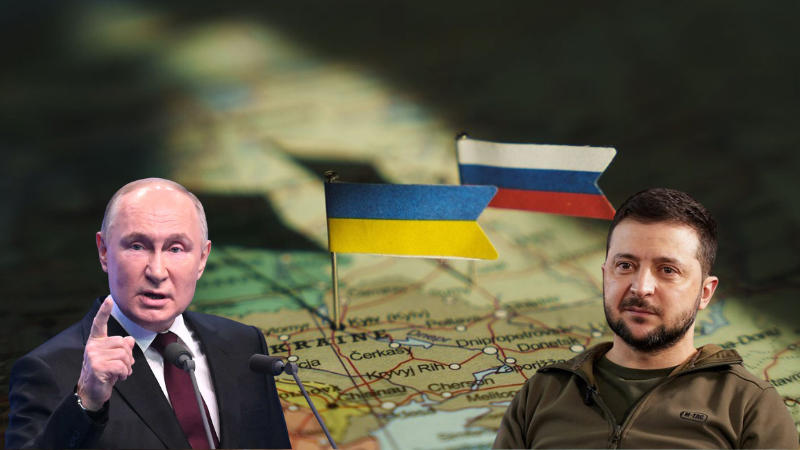
As of August 2025, Russia controls around 20% of Ukraine’s territory which is 44,600 sq miles, including Luhansk, most of Donetsk, and about 75% of Zaporizhzhia and Kherson. Smaller occupied parts of Dnipropetrovsk, Sumy, Mykolaiv, and Kharkiv are also included. Russia has insisted on complete control over Luhansk, Donetsk, Zaporizhzhia, Kherson, and Crimea (annexed in 2014) during the conflict.
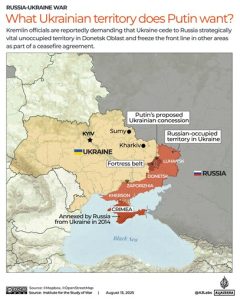
The so-called “land swap” idea has also come into the spotlight. Suggested by U.S. President Trump, this proposal would allow Russia to retain some occupied land. If implemented, Ukraine could lose territory it currently controls in exchange for ending the war. However, President Zelenskyy has outrightly rejected the idea, calling land concessions “totally unconstitutional and unacceptable.”
So far, there has been no concrete progress toward a trilateral meeting between Trump, Putin, and Zelenskyy during the Alaska summit. Sloviansk, Kramatorsk, Druzhkivka, and Kostiantynivka remain Ukraine’s strategic “fortress belt,” still under Kyiv’s control. Russia continues its repeated attempts to break through this line in order to advance into open country—an effort ongoing since 2014.
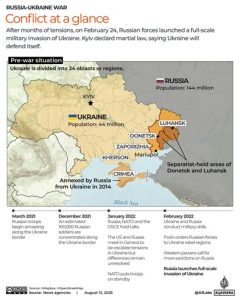
In retrospect, Russia backed separatists in the Donbas and grabbed Crimea in 2014. Between 2022 and 2023, Ukraine reclaimed a sizable portion of its land in the ongoing conflict, bringing Russian occupancy down from 27% to 18%. But Russia has made new progress in 2024–2025, especially in Donetsk. As a result, 10 million Ukrainians have been displaced—6.9 million as refugees abroad and 3.7 million internally.
Source: Trump-Putin meeting: How much territory does Russia control in Ukraine?