The Special Representatives (SR) of both India and China, namely Mr. Ajit Doval (National Security Advisor, India) and Mr. Wang Yi (Foreign Minister, China) met in New Delhi, India (18–19 August 2025) by co-chairing the 24th round of the Special Representatives’ dialogue on the Boundary Question.
They met in a positive and constructive spirit, based on the strategic guidance of the leaders of the two countries for managing border issues. On the basis of the agreement on Political Parameters and Guiding Principles, China and India decided to settle the boundary dispute. In order to work on an early harvest in boundary delineation, they also decided to establish an Expert Group within the Working Mechanism for Consultation and Coordination on India-China Border Affairs (WMCC). Furthermore, the High-Level Mechanism on People-to-People Exchanges in India (2026) and other bilateral discussion mechanisms were decided to be resumed by both parties.
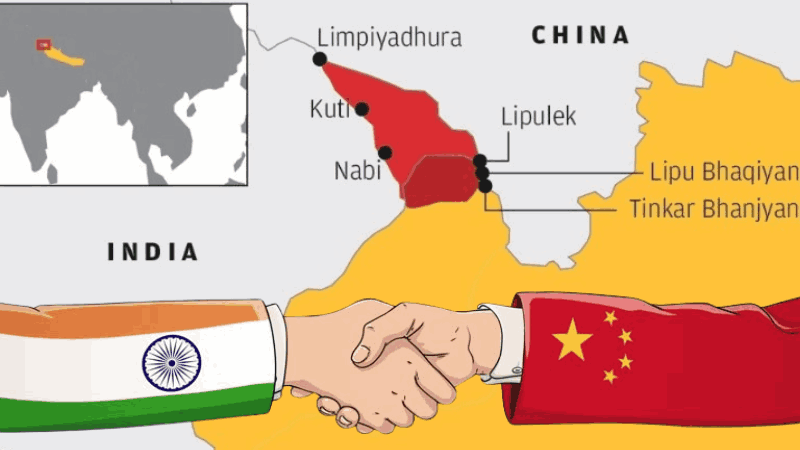
They further agreed to resume direct flight connectivity, finalize an updated Air Services Agreement, share hydrological data bilaterally during emergencies while continuing MoU discussions, and re-open border trade through Lipulekh Pass, Shipki La Pass, and Nathu La Pass or Renqinggang–Changgu, Pulan–Gunji, and Jiuba–Namgya (Chinese names).
Also Read: Bodh Gaya: Symbolism in Oli’s India Visit
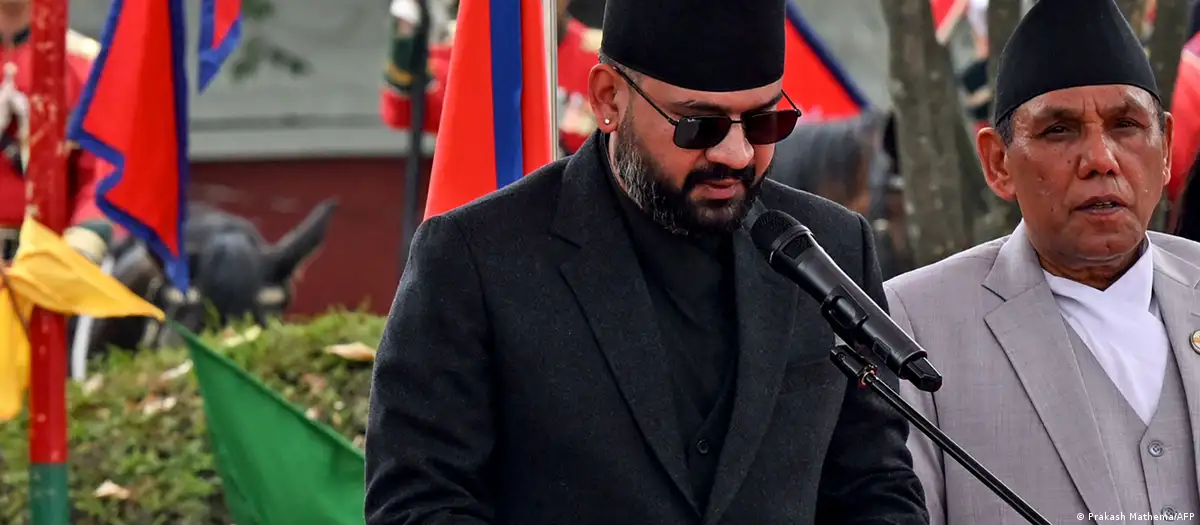
The Lipulekh Pass is a tri-junction among India, China, and Nepal. Both countries bilaterally agreed to re-open border trade without informing Nepal. This is a critical area of understanding between India and China, where Nepal has to raise the issue. Although the opening of the trading route in Lipulekh was already agreed upon by India and China in 2015, Nepal had also raised the issue at that time, but nothing substantive came from either neighbor.
In 2015, Nepal government had expressed its disagreement through separate diplomatic notes addressed to the governments of both India and China. The two sides agreed in 2015 to include the Lipulekh Pass as a bilateral trade route without Nepal’s consent.
This SR dialogue was built upon the foundation laid during the BRICS sideline meeting between Indian Prime Minister Narendra Modi and Chinese President Xi Jinping in Kazan, Russia (October 23, 2024).