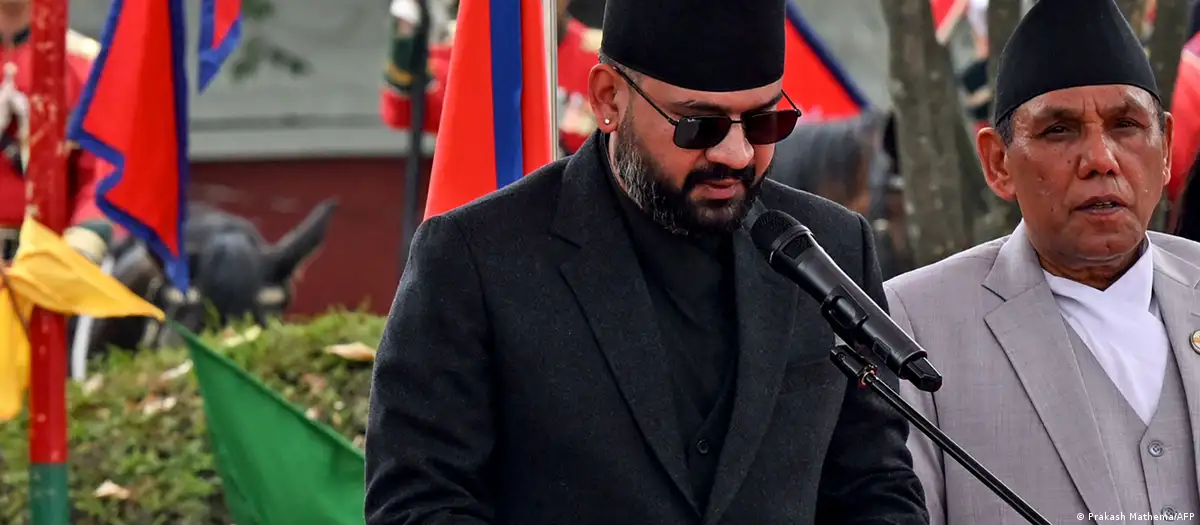
Nepal’s foreign ministry press release regarding Prime Minister Oli’s upcoming visit to China to attend the SCO Summit from 30 August to 3 September 2025 has raised significant questions. The visit is planned at the cordial invitation of H.E. Mr. Xi Jinping, President of the People’s Republic of China, but the press release stumbled on a troubling line. Apart from PM Oli’s participation in the SCO Summit, the release mentions “a commemoration of the 80th anniversary of the Victory of the Chinese People’s War of Resistance Against Japanese Aggression and the World Anti-Fascist War.”
The wording reflects a surprising insensitivity on the part of Nepal’s foreign ministry. PM Oli’s decision to attend the anti-Japan military parade on 3 September 2025 has already drawn widespread criticism, but the press release adds another layer of diplomatic complication by disregarding Nepal’s long-standing partner, Japan—even in official communication. This press release risks being remembered as an example of how leaders and bureaucrats fail to grasp even the basics—the “ABCD” of diplomacy. Evidently, they do not even recognize who our real friends are.
Addressing parliament about his upcoming trip, PM Oli stated:
“As the final event of the visit, our delegation, along with world leaders, will participate in Beijing on 3 September 2025, in the ceremony organized by the Government of China to mark the 80th anniversary of the Victory of the Chinese People’s War of Resistance Against Japanese Aggression and the World Anti-Fascist War. According to the information provided by the Chinese government, more than 50 countries will participate in this event.”
According to the Chinese State Council, 26 foreign leaders are expected to attend the military parade. Several countries on this list belong to the former Soviet bloc. These include Russia, Belarus, Kazakhstan, Uzbekistan, Tajikistan, Kyrgyzstan, Turkmenistan, Armenia, and Azerbaijan are all former Soviet republics. Slovakia, as part of Czechoslovakia, was part of the Eastern Bloc under Soviet influence during the Cold War. These nations were either directly part of the USSR or aligned with it through the Warsaw Pact.
Other countries, such as Pakistan, Vietnam, and Mongolia, are strategically close to China. Moreover, Russia and China have been nurturing a long-term understanding of friendship and strategic cooperation.
Former Ambassador to Denmark and foreign affairs expert Mr. Vijay Kant Karna remarked:
“This is a serious deviation from our established policy. It goes against our Constitution, the statements made in Parliament, our national interest, and our foreign policy. Participating in this military parade will cause great harm to our very close relationship with our long-standing partner, Japan. Japan has been supporting us selflessly for the last 70–75 years and has never pressured us to take its side in international affairs. To fulfill the interests of a particular party and its leader with China, the Prime Minister has put the entire country at great risk.”
Similarly, political analyst Mr. Anurag Acharya, Director of the academic institution PEI, said:
“Japan is our long-term and very close partner. It is not appropriate to participate in an event that will be seen as directly hurting our partner country. The Prime Minister’s participation in the SCO Summit is fine. But taking part in this parade, which is a side event, is a sensitive issue that his advisory team and bureaucracy must understand. This is not just a one-time decision—it can set a precedent. Its long-term implications could be serious. In diplomacy, one must also know how to say ‘no’ tactfully.”
Nepal is already grappling with a trust deficit with its immediate neighbors. Such a move, resonating with a China-favored stance, may eventually put PM Oli’s upcoming visit to India in turmoil, as he faces the tough task of negotiating a border dispute with India. The Oli government’s decision to participate in the anti-Japan parade, which had been rejected by Nepal’s President just weeks earlier, not only demonstrates a disregard for the decorum expected of a Prime Minister but also exposes the uncertain direction of the country’s foreign policy. One cannot help but ask: are we in a position to identify what truly constitutes a smart choice for Nepal in foreign policy?