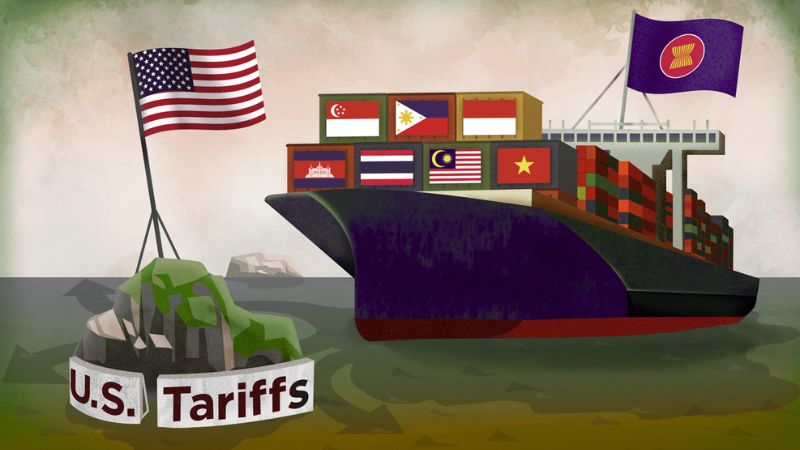
According to the IMF, the latest projections show that growth in the Asia-Pacific region is likely to modest slowdown, not a sharp decline, to 4.1 percent next year from 4.5 percent this year because of major economies, like China’s economic forecast for next year, which is around 4.2 percent, down from this year’s 4.8 percent, while Japan is decelerating from 1.1 percent to 0.6 percent, with India being an exception, pacing at 6.6 percent this year. Furthermore, the ASEAN economies will expand by 4.3 percent, as well as South Korean growth increasing from 0.9 percent this year to 1.8 percent. As a matter of fact, inflation will remain moderate, and Asia’s economic growth next year is expected to increase more than previously estimated despite weaker external demand, elevated tariffs, and persistent policy uncertainty.
This year and next year, Asia will remain the biggest driver of global growth, and the shocks generated from trade tensions have been cushioned by front-loading of exports ahead of new levies, increasing investment in AI, reconfiguration in supply chains within the region, and easing of policies in some countries.
Production and sourcing are taking a new trend because of shifts within the region. The larger share of intermediate goods flowing to and through Southeast Asia and other hubs, amplified by AI-driven growth, is bolstering the exports of advanced technology from economies including Korea and Japan, deepening intra-Asian trade.