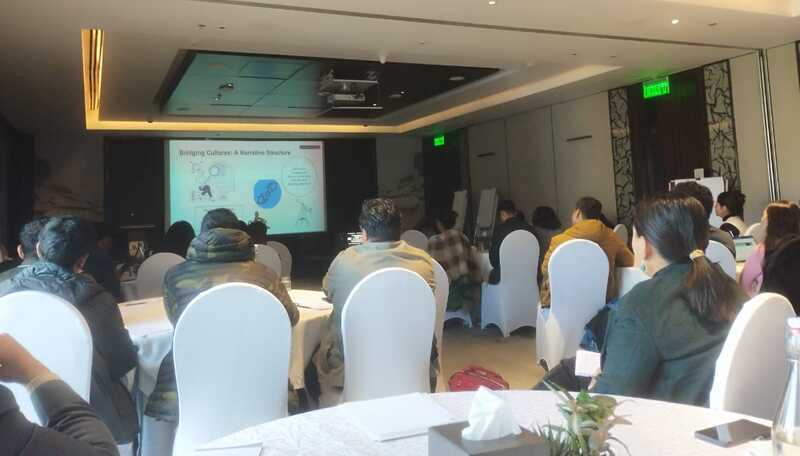
The one-day workshop was organized in Kathmandu on the eve of the International Conference, titled “Delivering for Nutrition in South Asia: Towards Impact at Scale (December 2–4, 2025)”. During the workshop, it was shared that research outcomes are only usable when they are adopted by the policymakers. The workshop discussed that the policymakers need to see the research in 360 degrees; also, they have a fear of whether their intervention works or not, and they always want to make the research holistic. But for the researchers, focusing on one agenda works with limited fear from the public. Therefore, the modes of engagement for making research usable can be linear, relational, and system-level. The workshop stated that the linear approaches use ‘push’ evidence out from academia or ‘pull’ evidence into government, relational approaches recognize that evidence use is social, relying on expertise and shared understanding, and system approaches aim to tackle barriers to improved evidence use and create a more supportive culture.
The facilitators raised that sometimes data will not be ready to make policymakers act. It is journalism that brings the human-side story to build a narrative that can persuade policymakers to act. Interestingly, the workshop facilitators also talked about the new Google framework known as Google EEAT (Experience, Expertise, Authoritativeness, and Trustworthiness) to analyze the content posted online and place only those who pass EEAT at the top of the search options. Underlining this, reliable content is now emerging as a new demand despite the flooding of misinformation/disinformation.
The workshop focused on the whole ecosystem that can embed data generation, policy intervention, evaluation, and continuation of the cycle. Further, the workshop highlighted the key roles of media in disseminating the research among a wider audience for building narrative and public perception in the right way.
The workshop also provided group work opportunities for the participants, enabling them to tackle case stories and share among the groups.