The basic tenets of Sankhya Philosophy revolve around metaphysics, epistemology, logic, axiology, and ethics. The core of these fundamental points can be reordered to not only highlight the belts of the basis of the philosophical idea but also to depict the creation as coming from the union of Purusha and Prakriti. The body of the logic of the Purush lies on the fact that even though it is called pure, unchanging consciousness, it is still the true Atma in humans that remains unaffected by body or mind, and is the one that exists in the individual spirit. It is also explained that ultimately, it is a being beyond space and time.
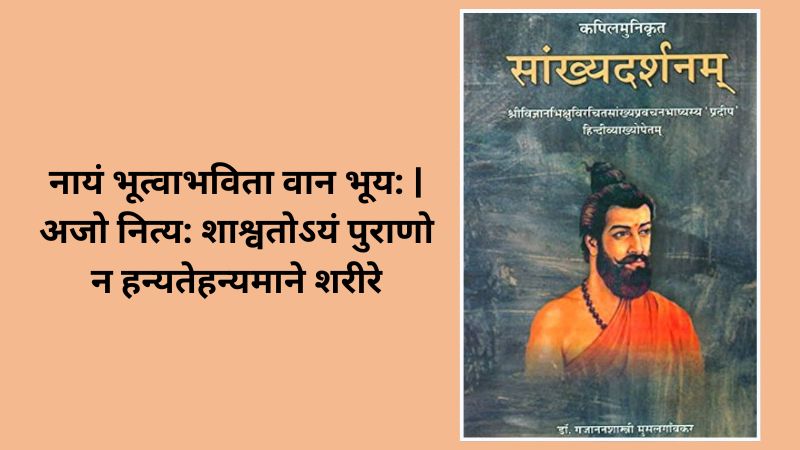
Prakriti is a force that is always changing and is dependent upon the material world. Prakriti being the source of matter, energy, and thoughts, emotions and logic. Purush is considered the most primary and ultimate source of awareness and consciousness whereas Prakriti is said to be the provider of the material for experience. In metaphysics, Purush and Prakriti are not only the root but also the primal elements that sustain the whole cosmos. Understanding the differences and recognizing between these two is, as per Sankhya, the criteria by which one can spiritually evolve. The linkage between Purush and Prakriti is also stated in Bhagavad Gita Chapter 2, Verse 20. It says that:
na jāyate mriyate vā kadāchin
nāyaṁ bhūtvā bhavitā vā na bhūyaḥ
ajo nityaḥ śhāśhvato ’yaṁ purāṇo
na hanyate hanyamāne śharīre
This implies that the soul is an entity which does not come into existence, does not die and is everlasting. The body is destroyed but the soul is without birth, eternal, immortal, and ageless. This particular sloka is a perfect match with the Sankhya doctrine, wherein Prakriti is vinashi (perishable) and purusha is avinashi (imperishable).