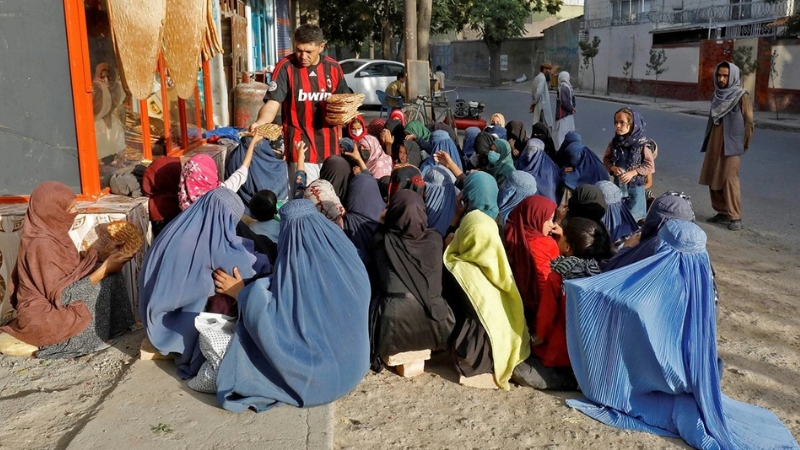
A significant concern has been raised following a report on the situation in Afghanistan, which was submitted to the UN Secretary-General. The report characterized Afghanistan as a country undergoing a multidimensional humanitarian crisis. The crisis factors that the country is experiencing include extreme climate change events, natural disasters, large-scale cross-border returns, limited access to services, acute food insecurity, malnutrition, and chronic poverty. At the same time, the increased security constraints have, therefore, challenging for women and children, as these groups have been more heavily impacted than others. In fact, it is estimated that out of the 23 million Afghan population, more than half will be in need of humanitarian assistance in 2026.
Key Challenges
The population of Afghanistan increased by 6% because of 2.5 million people returned to a country in 2025, the majority of which are coming from Iran and Pakistan. Besides that, this has worsened, the ongoing crises in Afghanistan (economic, climate, and humanitarian) that have been existing for several years, due to the fact that these additional people are demanding for services and basic needs to settle down. So, the World Bank forecasted that this change will drop the average income per person by 4% which will be the third year in a row that the GDP per capita is decreasing.
Gender-based barriers have always been the major challenges that lead to restrictions on women’s education and female health professionals’ shortage. This shortage of female health workers has led to the worsening of the already high maternal mortality rate. To help alleviate these gaps in services, UNFPA has sent 2,515 female healthcare workers. Also, a majority of 74% of female UN staff are working from home as they are restricted to move around like the male staff.
On the 31st of August 2025, a 6.0 magnitude earthquake hit the area causing an estimated US$183 million economic loss in the form of physical damages to building and infrastructure. This also resulted in around 500,000 people affected, 2,100+ people killed, and 3, 600 people injured (women and girls was more than half of the victims). Actually, more than half of the 23 million Afghan population are projected to require humanitarian assistance by 2026.
Among the most severely cold, affected 204, 000 people, the provision of basic needs and life, saving services will require significant investment ($111.5 million). Among those people will be the locals in the earthquake, hit areas who will require shelter, clean water, and proper sanitation. Apart from that, the earthquake on 3rd November 2025 led to at least 26 fatalities, 1, 172 people were injured, and 874 houses were either partially damaged or demolished.
Only 35. 7% of the Humanitarian Needs and Response Plan is represented by the amount raised so far which is $863. 9 million out of the required $2. 42 billion as of November 7th, 2025.
Reporting that in the period from January to August 2025, humanitarian partners were able to reach 13. 2 million people out of which, 9. 2 million received food and livelihoods support, 5.7 million were provided with health services, 13. 2 million people got access to improved water, sanitation, and hygiene, 3. 9 million children and pregnant/lactating women were supported with nutrition, and 702, 000 children were given educational services.
The number of malnourished women and children has gone up by 15 percent when comparing 2024 and 2025 in the food security and nutrition sector. During this period, WFP has helped 3.4 million people, while FAO has supported 235,740 people mainly through women interventions.
The WHO has recorded that the spread of Crimean Congo hemorrhagic fever, watery diarrhea, and dengue fever has been substantial. There were 422 health facilities that had to close because of a lack of funding. Besides that, UNICEF has given vaccines, nutrition check, up services, and medicine to children in 2,400 health facilities.
Latest Development
The EU has announced a major investment of €10 million to launch the second phase of the Women’s Economic Empowerment through Local Enterprise Development (WE-LEAD) program. The key intervention includes transforming informal savings groups into Sharia-compliant Rotating Savings and Credit Associations. One of the things that happened is that UNDP, through the EU funding, has to align its program with Sharia law which theoretically is against Western liberal policies.
Besides, the IOM reports that earthquake, displaced families need shelters mainly to keep warm and live through the freezing temperatures. IOM in this case is evaluating the market and handing over supplies to the people who most urgently need them.
Officials in the Afghan government hold meetings with the UN team to be kept informed about the situation in their country. When last time the Under-Secretary, General Rosemary DiCarlo visited Kabul on 25 January 2026, she had discussions with the de facto authorities of Afghanistan. She talked about the restrictions that UN Afghan female staff are facing and also the limitations of women in general going to school, working, and being in the public life, and suggested that these restrictions be removed immediately. So far, no commitment on the matter has been made by the Afghan authorities with regard to Ms. DiCarlo’s visit.
SWOT Analysis
The development work of international agencies in Afghanistan can be analyzed from the perspective of a SWOT (Strengths, Weaknesses, Opportunities, and Threats) analysis. Here, S is for strengths, which include the presence of UN agencies, INGOs, and humanitarian actors that depict extensive operational experience and solid local networks throughout Afghanistan. Despite the changing political climate in Afghanistan, there has been community-level acceptance of many development and humanitarian actors, particularly at the local level, especially for basic services.
In terms of Weaknesses, restrictions imposed by the de facto authorities, especially on women’s participation in aid work, limit the effectiveness of interventions. Secondly, aligning with local normative principles might lead to a reduction in internationally accepted standards of human rights, gender equality and liberal development norms. Third, the uncertainty of funding causes the implementation of development projects to be at the mercy of donor fatigue, sanctions, and political sensitivities.
Aligned with the Opportunity, the localized market where youth play a role offers chances for skills development and micro-enterprise. Besides that, regional engagement depicts a strong potential for facilitating trade, connectivity, and humanitarian access.
Under Threat, women being repressed, human rights conditions worsening, highly changeable and harsh weather. In addition to this, natural disasters, and armed groups at a local level are some of the factors that jeopardize program continuity and staff safety.
Conclusion
What is highlighted above as being first priority is that in fragile and failed states such as Afghanistan the set of problems impacting the daily life of individuals is of the highest importance. Individuals in Afghanistan have to deal with crises created by politics, society, the economy, weather, and unprecedented consequences. It is advisable for development partners to cope with the existing challenges and develop projects accordingly. But interestingly, sometimes in the process of adjusting programs to the country context, the vigor of the program is lost. This can be illustrated with the example of the EU-funded WE-LEAD project, where UNDP had to adjust its program to align with Sharia law.
At last, the fundamental factors causing the crisis in Afghanistan should be addressed through multi-stakeholder engagement that must take into account commonly agreed UNAMA visions: political stability and an inclusive governance system; respect for human rights and gender equality; provision of basic services and economic stability; and security and good relations with the region.