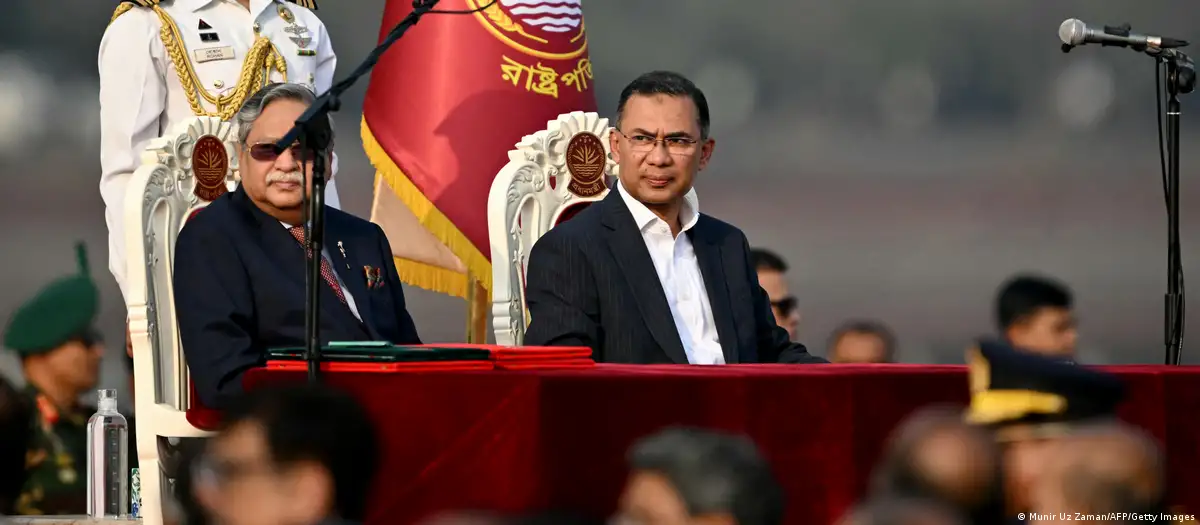
The Bangladesh Nationalist Party (BNP) is returning to power after a lapse of 20 years as they have won a clear majority in the 13th National Parliamentary Election. Today, Tariq Rahman, chairman of BNP, was sworn in as the new Prime Minister of Bangladesh. Prime Minister Rahman announced new cabinet under his leadership comprising 25 ministers and 24 state ministers.
In the meantime, Shishir Monir, a leader of Bangladesh Jamaat-e- Islami, who is also a lawyer at the Supreme Court, suddenly announced that they were planning to establish a “shadow cabinet, ” which has incited a fresh round of discussions among the politicians.
On Saturday evening, Shishir Monir announced this plan on his Facebook page, that his party intends to form a shadow cabinet. Mohammad Shishir Monir, a lawyer and also a candidate of Jamaat from Sunamganj 2 (Dirai, Shalla) constituency had lost the election.
The idea of a shadow cabinet is widely understood in parliamentary democracies and especially in those that follow the Westminster system. Normally, the opposition party(s) after forming a shadow cabinet, use it as a means to keep an eye on the government, highlight its errors, and provide alternative solutions.
Contrary to this, a shadow cabinet has not been formally set up in Bangladesh, and the current political atmosphere does not demand it. Still, a number of political experts have been advocating for the benefits of such a mechanism in terms of increasing parliamentary accountability and consolidating democratic practice. The matter had been brought under the limelight again when Shishir Monir from Jamaat and Asif Mahmud of the National Citizen Party (NCP) recently declared that they were in favor of creating a shadow cabinet here.
Salahuddin Ahmed, newly elected parliamentarian, today said his party (BNP) has welcomed the decision to form an opposition shadow cabinet.
Possibly, Bangladesh Jamaat-e-Islami, a party known for its uncompromising attitude and radical stance may try to turn a shadow cabinet into a medium through which it could gain a wider public base by shaping its narrative and engaging in mass outreach.