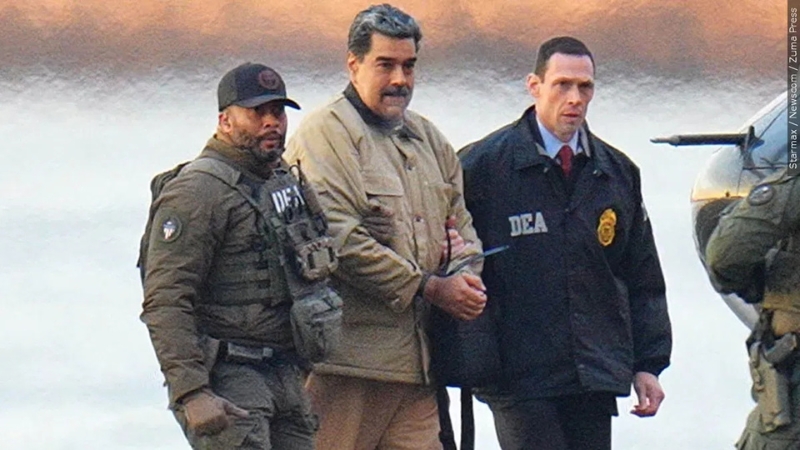
The international political landscape is on a major roller-coaster ride. The Venezuelan President Nicols Maduro and his wife were captured. This was conducted after a U.S. military engagement in Venezuela. They have been moved to New York to face charge with narcotics trafficking and organized crime. China and Russia, in unison, condemned the operation and called on Washington to cease its interference in the internal affairs of other sovereign states. Conversely, a European country like United Kingdom and the European Commission extended their solidarity with the U.S. move and maintained that it signaled the termination of the so, called Venezuelan Bolivarian regime. India’s statement to be very careful and took a neutral stance by not approving or disapproving of the incident directly. Pakistan, a close ally of China and a friend of the U.S., also issued a neutral response.
According to the chargesheet filed in a New York court, Maduro has been labeled a “narco-terrorist.” Prosecutors allege that he misused his authority during his tenure as foreign minister by issuing diplomatic passports to drug smugglers, enabling the facilitation and distribution of narcotics through international networks.
The operation has also sparked debate within U.S. domestic politics. The Senior Democratic lawmakers, including former House Speaker Nancy Pelosi, acknowledged that the Venezuelan regime is illegitimate but raised concerns over President Donald Trump’s unilateral decision to carry out the military operation without prior notification to the House of Representatives. Lawmakers have urged the administration to promptly brief the House Foreign Affairs Committee.
Analysts suggest the strike reflects the strategic outlook outlined in President Trump’s recently released National Security Strategy 2025, which emphasizes the Western Hemisphere as a core area of U.S. influence. The approach has been widely described by experts as a Trump-era corollary to the Monroe Doctrine.