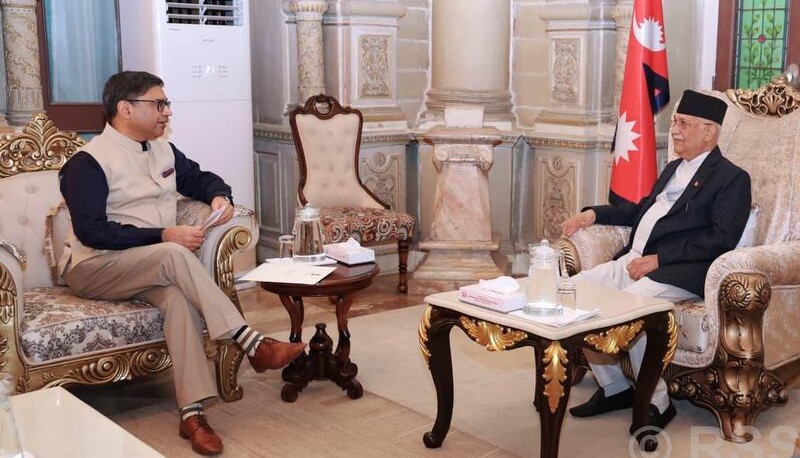
Indian Foreign Secretary Vikram Misri met with the President, Prime Minister, key political leaders of Nepal, and the Army Chief. For the first time, he also had the opportunity to meet with the leaders of the Rastriya Swatantra Party (RSP).
He held discussions with RSP’s Vice Chair Swarnim Wagle and the party’s Foreign Department Chief, Shishir Khanal, at Hotel Dwarika. In addition, the Indian Foreign Secretary met with Madhesh-based politicians, including (expectedly) Mahanta Thakur, Upendra Yadav, Rajendra Mahato, C.K. Raut, Hridayesh Tripathi, and Resham Chaudhary.
After the economic blockade, India’s outreach to Madhesh-based parties has decreased. With divisions among Madheshi parties, their influence in Kathmandu has weakened, leaving them vulnerable in advancing their agenda of constitutional amendment. Although a newly formed alliance of Madhesh-based parties, known as the Federal Democratic Front, was established in April 2025 to push for constitutional amendment and protect the progress of the federal democratic republic, its impact appears negligible.
Misri’s meetings across Nepal’s political spectrum are being viewed as an effort to better understand the country’s current political climate—insights that will help New Delhi shape its future Nepal policy.