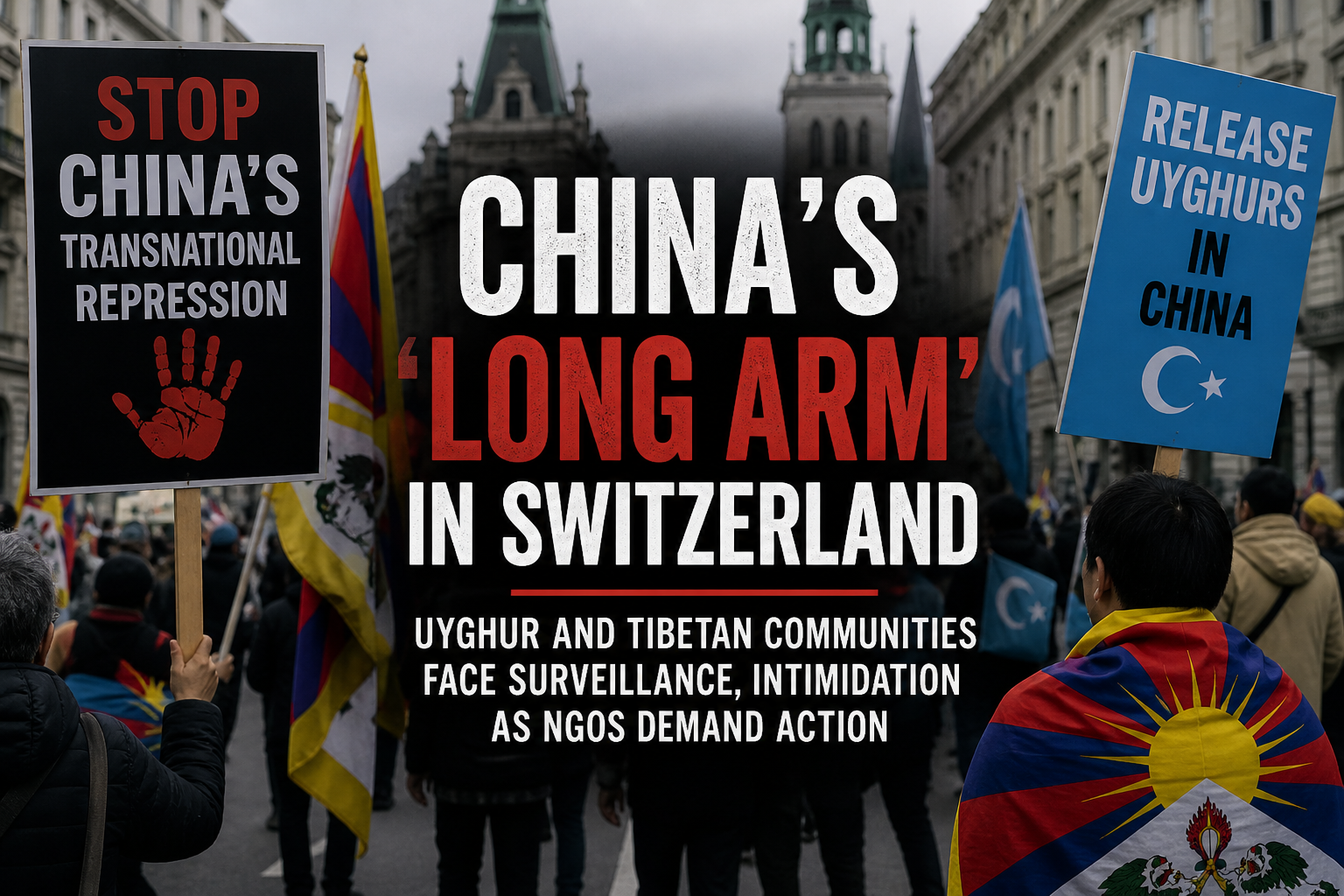
Swiss NGOs and diaspora communities have publicly criticized the Swiss government for not taking any tangible steps in ensuring the protection of Tibetan and Uyghur communities who are experiencing transnational repression because of China.
Yet, even after the Federal Council admitted that these communities in Switzerland are exposed to surveillance, harassment, and pressure from abroad during the granting of asylum to a Tibetan political activist at the UN Human Rights Council in March 2025, activists are claiming that the real situation has only worsened.
“We are really let down that nothing has actually been done, ” said Selina Morell, Voice’s project leader for Tibet in Bern.
Among these tactics transnational repression is when authorities follow protestors, harass them via computer, and even threaten their families in Indigenous regions such as Xinjiang and Tibet. Freedom House has reported that from 2014 to 2019, at least 1,375 serious cases of such repression have been documented worldwide, and according to experts, the real number is much larger.
People from the diaspora say that the intimidation never ends. President of the Uyghur Association of Switzerland, Rizwana Ilham, says that the police are taking pictures of activists during protests very often, on the other hand, from the Tibetan community, Arya Amipa points to the attempts to hack his account and anonymous threats.
The Swiss government says that some of the first steps have been initiated. For example, a strategic support group was created within the Swiss Security Network to look into institutional responses, but Switzerland authorities have also confirmed that none of the concrete protective measures or awareness programs have so far been executed.
On the side of the civil society, these organizations maintain that there is an acute need for a secure and confidential system where victims can report their cases, alongside improved training for the police force. Some victims say that the police are generally unaware of transnational repression which results in participants being disheartened and less willing to report crimes.
Activists also fear that Switzerland’s prudent stance might be due to economic reasons, including the country’s ongoing trade talks with China.
As new technologies such as disinformation campaigns and deepfakes further increase the vulnerability, human rights organizations emphasize that postponements may give a license to oppress more unless quick and bold measures are implemented.